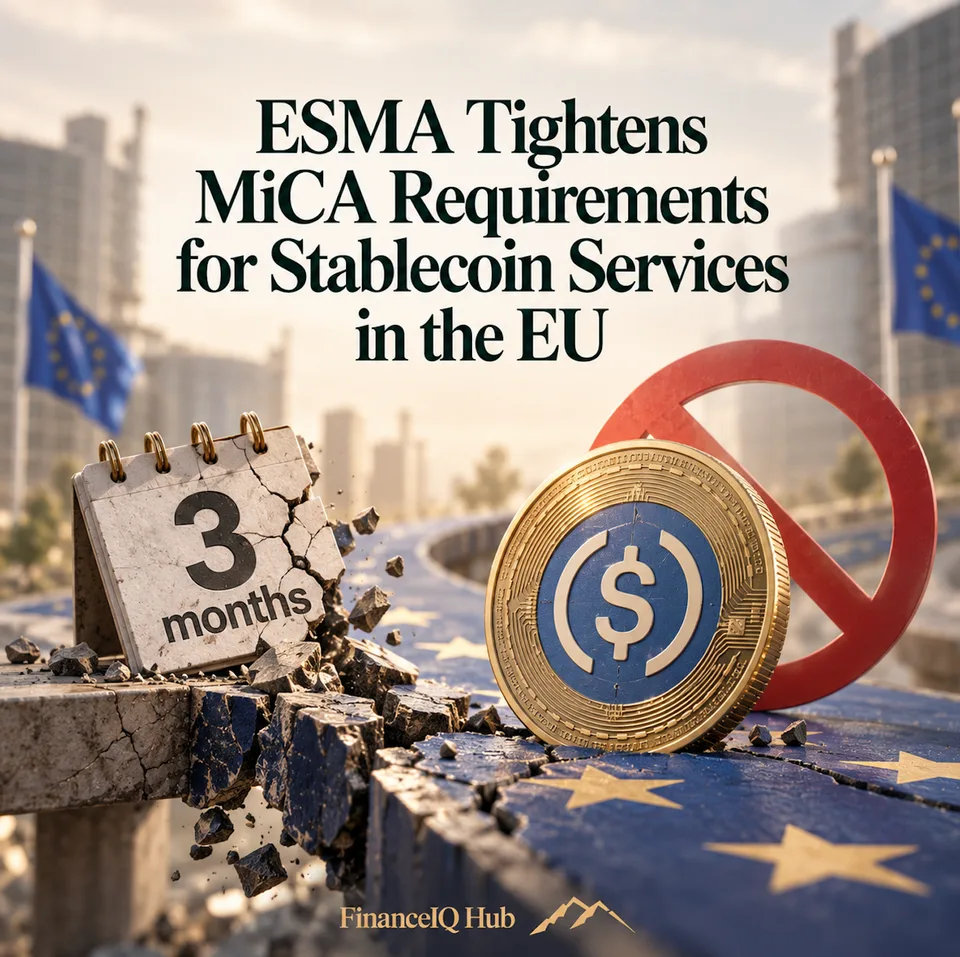
MiCA at 100 Days: Euro Stablecoins Grow 23% as Institutional Digital Asset Markets Shift
The European digital asset market is undergoing significant changes following the end of the MiCA transitional period on 1 July 2026. A new industry report highlights growing demand for euro-denominated stablecoins, increasing institutional trading activity and the rising importance of regulatory compliance.
The study, published by Finery Markets in collaboration with Banking Circle, Fipto, The Vault and Sumsub, examines how the Markets in Crypto-Assets Regulation (MiCA) is reshaping the European financial ecosystem.
Euro Stablecoins Record 23% Growth
According to the report, the total supply of euro-denominated stablecoins increased by approximately 22.6%, reaching $848 million in early September 2026, compared with $692 million at the beginning of the year.
Although euro-linked stablecoins remain significantly smaller than their US dollar counterparts, their growth reflects increasing interest in regulated euro-based settlement solutions.
This development creates new opportunities for payment institutions, fintech companies and financial service providers seeking to integrate digital assets into cross-border payment infrastructure.
Institutional OTC Trading Expands by 57%
Another important finding is the growing role of institutional over-the-counter (OTC) trading.
Finery Markets reported a 57% year-on-year increase in institutional OTC spot trading volumes during the first nine months of 2026.
During the same period, trading volumes across major centralised and decentralised exchanges declined.
This divergence suggests that institutional participants are increasingly prioritising professional trading infrastructure, liquidity management and regulated counterparties.
MiCA Is Changing the Regulatory Landscape
Beyond market growth, MiCA is introducing new operational and compliance challenges for financial businesses.
Companies providing digital asset services must carefully assess their regulatory obligations, including CASP authorisation, safeguarding arrangements, transaction monitoring and applicable payment services requirements.
Importantly, MiCA authorisation does not automatically replace other financial licences. Certain business models may also require authorisation under payment services or electronic money regulations.
For companies entering the European market, selecting an appropriate licensing structure and establishing suitable banking relationships are becoming increasingly important.
What Does This Mean for Fintech Businesses?
The latest market developments demonstrate that regulatory compliance is becoming a central component of institutional digital asset infrastructure.
Companies that combine appropriate authorisations, effective AML/KYC controls, reliable liquidity providers and compliant payment solutions may be better positioned to develop sustainable operations in the European market.
FinanceIQ Hub supports fintech and digital asset businesses with regulatory licensing, corporate structuring, banking solutions, payment infrastructure and compliance advisory services.
📩 Planning to establish or expand your financial services business in Europe? Contact FinanceIQ Hub to discuss your regulatory and banking requirements.
This article reflects information available at publication. Requirements may change; confirm current rules with the relevant regulator before acting.