
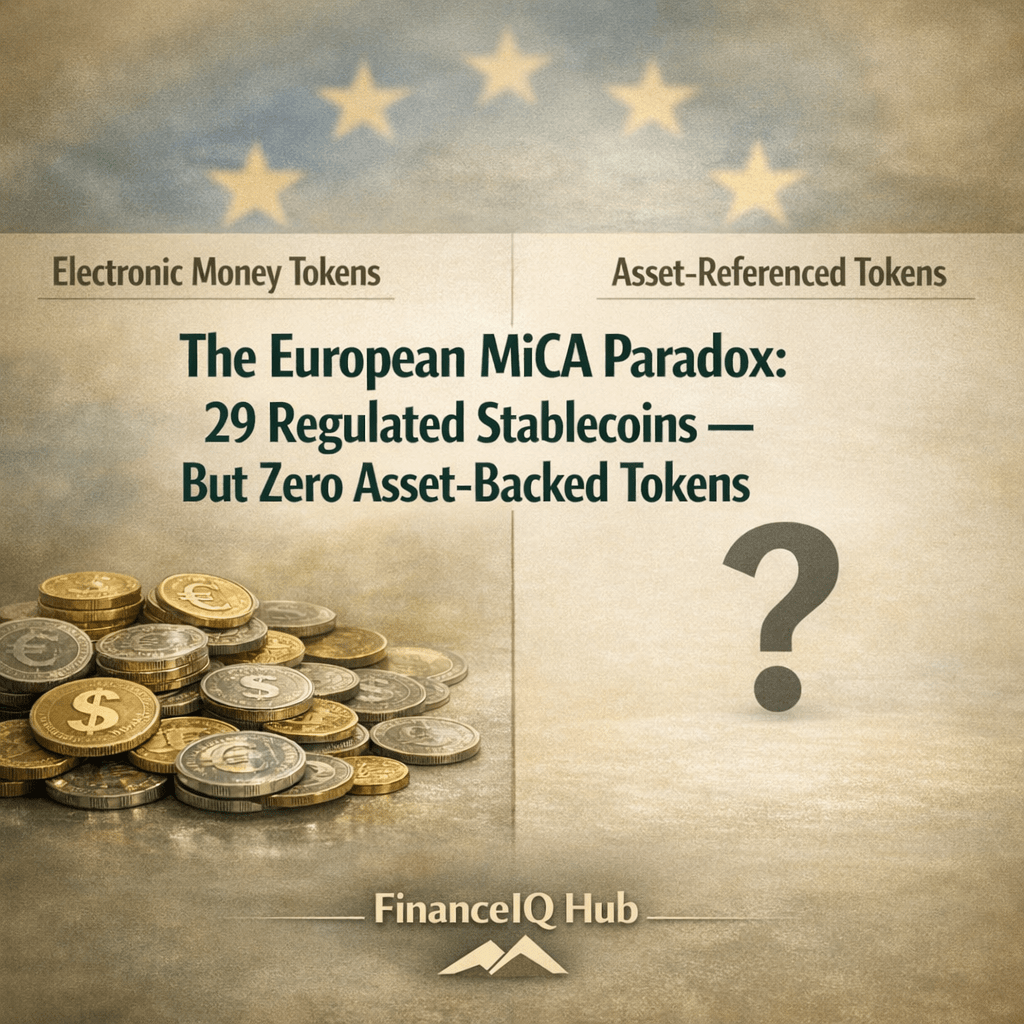
The European MiCA Paradox: 29 Regulated Stablecoins — But Zero Asset-Backed Tokens
The European digital assets market is gradually adapting to the new MiCA regulations. However, new data reveals an interesting anomaly: since the regime was launched, Europe still has not approved a single asset-referenced token.
According to the register of the European Securities and Markets Authority (ESMA), as of today there are:
- 19 licensed issuers
- 29 regulated stablecoins
- 11 EU countries where they have received authorization
At the same time, all of them belong to the category of Electronic Money Tokens — tokens pegged to a single fiat currency, such as the euro or the US dollar.
The distribution looks as follows:
- 17 stablecoins — denominated in euros
- 9 — in US dollars
- 3 — in British pounds, Czech koruna, and Swiss francs
Meanwhile, the asset-referenced tokens category remains completely empty.
What Are ART and Why Are They Missing? 🪙
MiCA divides stablecoins into two main types:
EMT (Electronic Money Tokens) — pegged to a single fiat currency.
ART (Asset-Referenced Tokens) — pegged to a basket of assets, such as multiple currencies, commodities, or other financial instruments.
ART could become an important tool for the digital economy, as their model allows the creation of more stable assets backed by diversified reserves.
However, market experts note that regulatory requirements for such tokens are significantly more complex than for standard EMT models. As a result, companies are not yet rushing to launch such projects within the EU jurisdiction.
This means that even with a regulatory framework in place, the market is not yet eager to use it in practice.
Is the Market Ready for Institutional Use? 📊
Another important signal is the limited use of regulated stablecoins outside the digital assets market.
According to industry analysts, most of them are still primarily used within Web3 ecosystems, rather than in traditional financial infrastructure.
In addition, only a few of the world’s largest stablecoins currently comply with MiCA requirements, creating a gap between the global digital assets market and the European regulatory model.
As a result, a paradox emerges:
Europe aims to become the most regulated digital assets market in the world, but at the same time risks slowing innovation in more complex financial tokens.
That is why the next updates to MiCA could become crucial for the development of the ART token sector 🚀.
 FinanceIQ Hub
Leave a comment